
You do not need to know what is wrong with you before you walk in. You just need to know it is not getting better on its own.
This page covers many of the conditions we treat and how we approach them. If you don't see your exact situation listed, that doesn't necessarily mean we can't help. It simply means we haven't had the opportunity to evaluate you yet.
Schedule An AppointmentConditions We Treat at a Glance
A quick index of what we treat most often. Click through for the full picture on any of these.
EDS and Hypermobility
Connective tissue disorders that standard care often misses or misunderstands. This is one of our core specialties.
Learn more about EDS and Hypermobility careSports Injuries
From youth athletes to weekend warriors, we treat the injuries that come from training, competing, and pushing the body hard.
Learn more about Sports and Athlete careAuto Accidents and Personal Injury
Whiplash, soft tissue injuries, and the delayed pain that shows up weeks after a crash.
Learn more about Personal Injury careChronic Pain
Pain that has been present for months or years, often with imaging that looks normal while the pain stays very real.
Jump to detailsFibromyalgia
Widespread pain, fatigue, and brain fog that often comes with normal labs and a frustrating list of unanswered questions.
Jump to detailsWhiplash
The neck pain that doesn't show up right away, and why that delay doesn't mean you're fine.
Jump to detailsConcussion and Post-Concussion Syndrome
Lingering brain fog, sensitivity to light and noise, and sleep disruption after a head injury.
Jump to detailsPlantar Fasciitis
Heel and arch pain that flares with activity and does not resolve with rest alone.
Jump to detailsPost-Surgical Recovery
Accelerating healing and rebuilding movement patterns after orthopedic surgery.
Jump to detailsCurious What Your First Visit Looks Like?
See exactly what happens at your first appointment, how your treatment plan works, and what follow-up visits involve.
Chronic Pain
Chronic pain is its own category of problem, separate from the injury that may have started it.
When pain has been present for months or years the nervous system itself becomes part of the condition. It amplifies signals, keeps muscles guarded, and drives inflammation that often does not show up clearly on imaging but is absolutely running in the background.
Fibromyalgia
If you have fibromyalgia, you already know the strange position it puts you in. The pain is real and it's everywhere, but the bloodwork comes back normal and the scans look clean. You're left holding a body that hurts and a stack of paperwork that says nothing is wrong.
One of the defining features of fibromyalgia is nervous system sensitization. The signals coming from your body get amplified somewhere along the way, so pain that wouldn't register for most people becomes constant and exhausting for you. That's not in your head. It's not "just stress." It's a real physiological pattern, and it's one we see often.
The fatigue that sleep doesn't fix and the brain fog that makes a normal afternoon feel like wading through mud aren't separate problems. They're part of the same picture. Standard care tends to treat each symptom on its own. We look at the nervous system driving all of them at once.
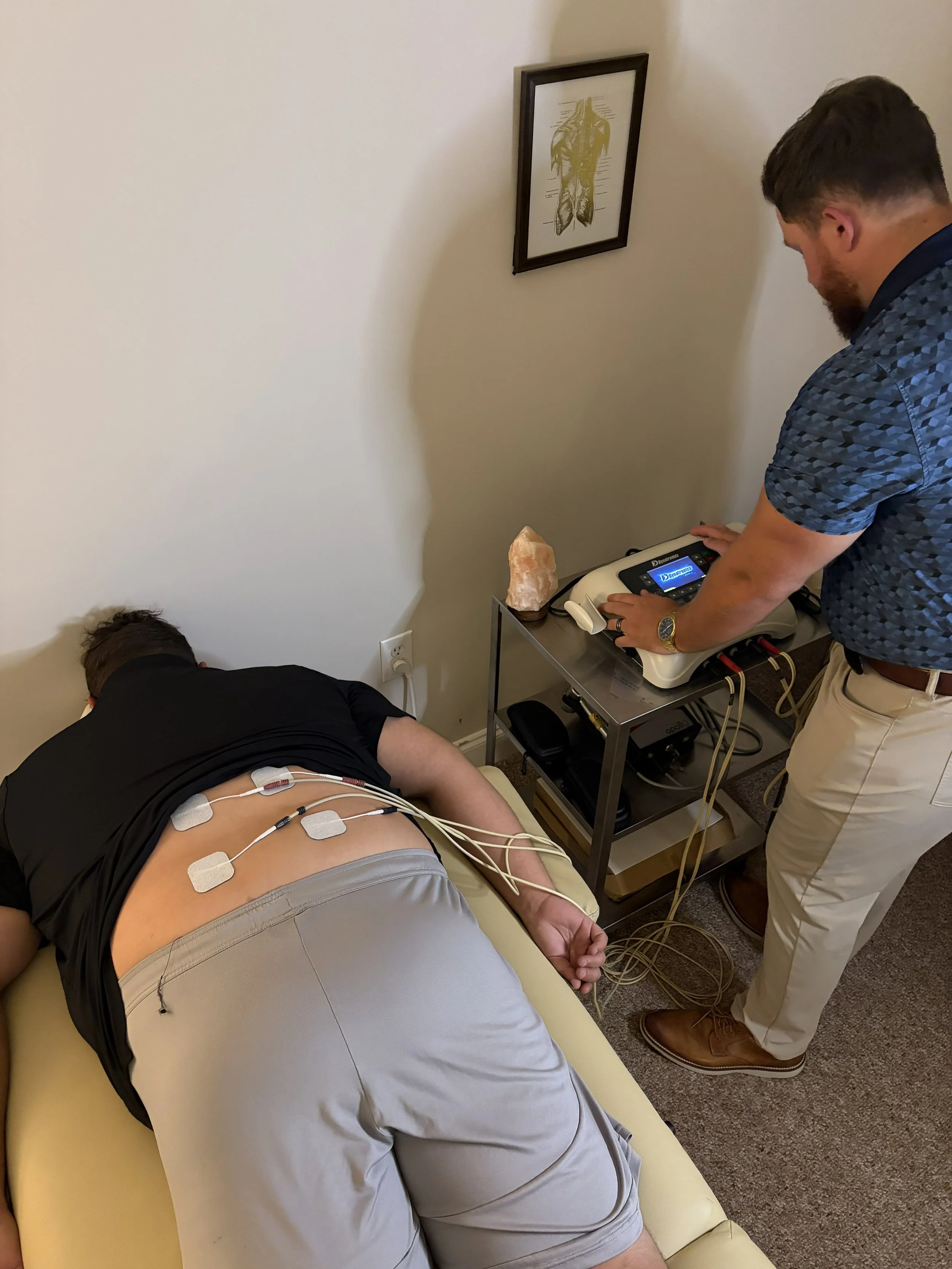
FSM is central to how we approach fibromyalgia. It works directly at the level of the nervous system. Dysregulation, cellular dysfunction, and inflammation may be contributing to the symptoms. We pair it with gentle chiropractic care and soft tissue work, applied carefully, since fibromyalgia patients often need a different touch than someone walking in with a single isolated injury.
Many patients experience meaningful improvement over a series of treatments.
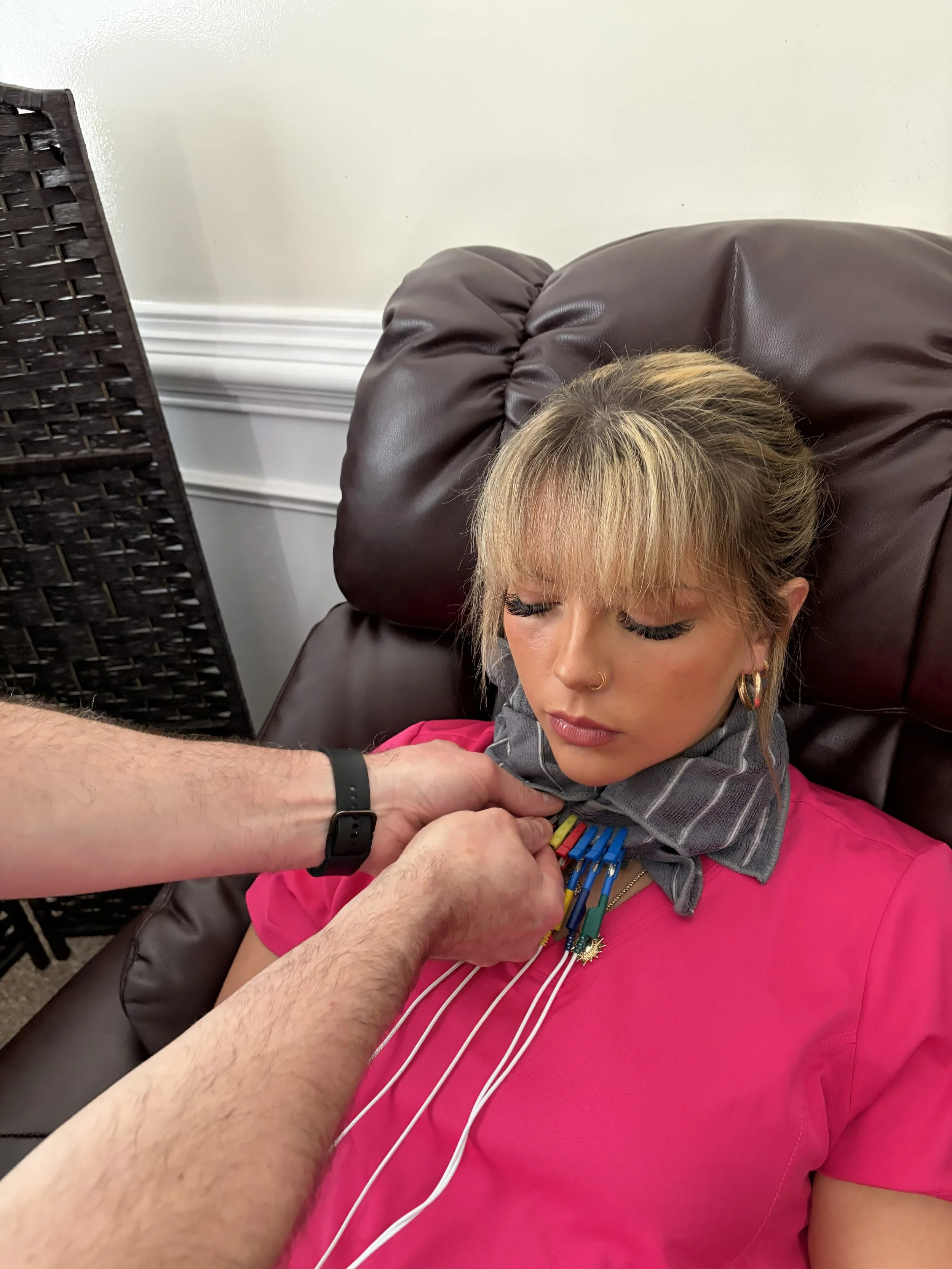
Image: FSM for Fibromyalgia
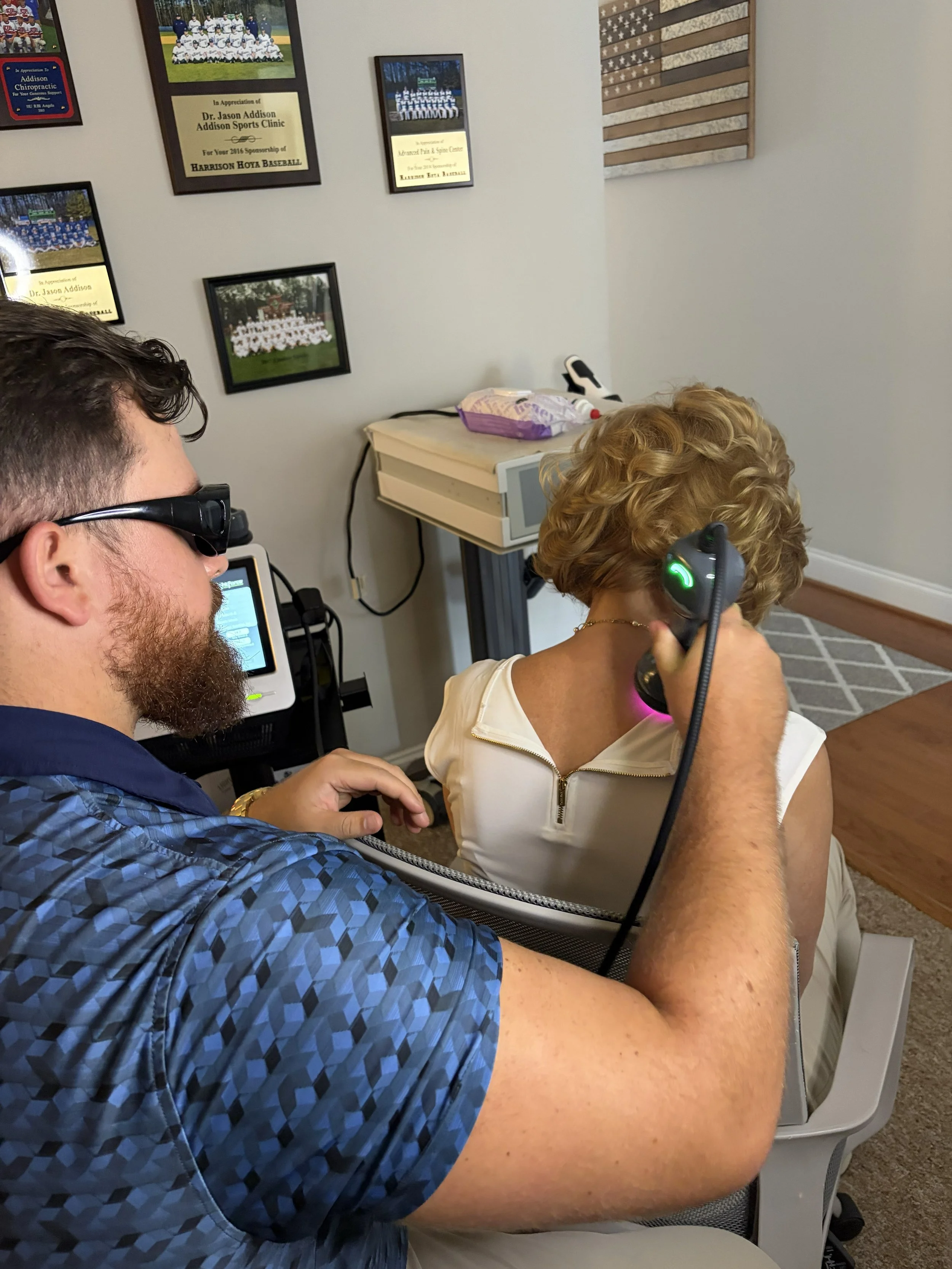
Image: Laser therapy for Fibromyalgia

Whiplash
If you walked away from a car accident and felt mostly fine, you're not out of the woods yet. Whiplash often doesn't show up right away. The real symptoms, the stiff neck that won't turn, the headache that won't quit, the brain fog that wasn't there yesterday, can take a day or two to surface. That delay isn't your body healing. It's your nervous system finally showing you what it was actually dealing with.
Whiplash occurs when the neck is forced through a rapid back-and-forth motion that can place stress on the muscles, ligaments, joints, and other soft tissues beyond what they are designed to tolerate. The damage doesn't always show up on standard imaging, but the pain and stiffness are real, even when a scan comes back clean.
Left untreated, whiplash has a way of becoming more complicated than it needed to be. The muscles around an irritated joint start guarding. The guarding becomes a habit. What could have resolved cleanly in a few weeks turns into months of stiffness and compensation patterns that are harder to unwind the longer they sit.
We treat whiplash with FSM to calm the nervous system, support tissue recovery, and address inflammation at the tissue level, gentle chiropractic care suited to how acute the injury actually is, and soft tissue work that respects what the area has been through instead of pushing through it.
Concussion and Post-Concussion Syndrome
A concussion is supposed to resolve in a matter of weeks. For a meaningful number of patients, it does not.
Brain fog that will not lift. Sensitivity to light and noise that makes normal environments exhausting. Sleep that will not stabilize. Anxiety that showed up after the injury and refuses to leave.
FSM is used to address persistent nervous system dysfunction and cellular inflammation that can contribute to lingering post-concussion symptoms. For patients who are months out from a concussion and still not themselves, this often addresses something nothing else has managed to touch.
We also assess the cervical spine and vestibular system, since post-concussion symptoms are frequently tangled up with neck dysfunction and balance issues that compound the picture.

Olympic athlete Macy, running the FSM concussion protocol

Shockwave therapy for plantar fasciitis
Plantar Fasciitis
Plantar fasciitis is one of the most common conditions we treat, and one of the most frustrating for patients because rest alone rarely fixes it.
The pain is real, but the foot is rarely the whole story. Movement patterns higher up the chain, including hip and ankle mechanics, often contribute to the load the plantar fascia is absorbing.
Shockwave therapy is one of our primary tools here. It is particularly useful for chronic, stubborn tissue changes that have stopped responding to rest, stretching, and standard conservative treatment.
We combine shockwave with soft tissue work and a movement assessment to address why the tissue broke down in the first place, not just the symptom at the bottom of the foot.
Post-Surgical Recovery
Recovery after orthopedic surgery is a critical window, and how that window is used matters.
Starting FSM early in the recovery process may help support the body's healing response during this critical period. In our clinical experience, many patients progress more comfortably and often appear to recover more efficiently when FSM is introduced early alongside their surgeon's rehabilitation plan. We have seen patients running meaningfully ahead of standard recovery timelines when FSM is introduced early.
Alongside FSM, we focus on movement retraining to address the compensation patterns that develop during the injury and surgical recovery process, since those patterns often outlast the original injury if nobody addresses them directly.
We coordinate with your surgeon and physical therapy team throughout, since post-surgical recovery works best as a coordinated effort rather than a siloed one.

Combining cupping, electrical stimulation, and FSM in a single recovery session
Curious What Your First Visit Looks Like?
See exactly what happens at your first appointment, how your treatment plan works, and what follow-up visits involve.
Frequently Asked Questions
Reach out anyway. This page covers what we see most often, not the full universe of what we can help with. Many patients come to us after being told by other providers that nothing else could be done.
Yes, and often. Many of our patients come to us after normal imaging and an unclear diagnosis elsewhere. We focus on what your body is actually doing, not just what a scan shows.
It depends on the service. Chiropractic adjustments, electrical stimulation, and soft tissue work are typically billable to insurance. FSM, cold laser, and shockwave are not covered by most insurance but are HSA and FSA eligible.
That is exactly what your first evaluation is for. We will tell you honestly what we think will help and why, rather than applying the same protocol to every patient regardless of diagnosis.
Yes. When appropriate, we are happy to coordinate with your primary care physician, surgeon, physical therapist, pain management physician, or other members of your healthcare team. Our goal is to complement your care, not replace it.
If something has been going on longer than it should, or if you have been told there is nothing more that can be done, we believe you deserve a thorough evaluation before accepting that answer.
Schedule An Appointment1275 Shiloh Road NW, Suite 2150, Kennesaw, GA 30144